Which therapies work? The evidence traffic light
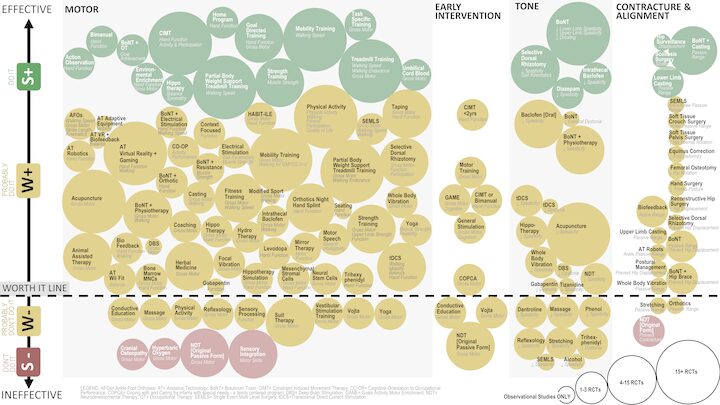
Which therapy really helps my child? The study “State of the Evidence Traffic Lights 2019” gives the most comprehensive answer so far. We have turned it into an interactive graphic.
The study
An international research team led by Iona Novak analysed more than 200 systematic reviews published between 2012 and 2019. They looked at which measures prevent cerebral palsy (CP) and which therapies have been shown to help children with CP – from motor skills and muscle tone to pain, sleep and eating, through to communication and support for parents.
How the traffic light works
- Green: High-quality studies show that it works.
- Yellow: There are indications, but the evidence is not yet certain. Measure the results in your child regularly.
- Red: High-quality studies show no effect or harm.
What is green
Green lights go mainly to active therapies in which the child practises themselves – for example:
- Constraint-Induced Movement Therapy (CIMT) and bimanual training
- goal-directed and task-specific training
- home programmes and an enriched environment
- mobility, strength and treadmill training
Most of the roughly 250 interventions studied are yellow. That does not mean they do not work, but that there are not yet enough good studies.
Why this matters for families
Time is especially valuable in the first years of life. The evidence traffic light helps parents and therapists choose together the therapies with the best evidence. Ask about them specifically at your next appointment.
Source: Novak I, Morgan C, Fahey M, et al. State of the Evidence Traffic Lights 2019: Systematic Review of Interventions for Preventing and Treating Children with Cerebral Palsy. Curr Neurol Neurosci Rep. 2020;20:3.