
Luisa's family
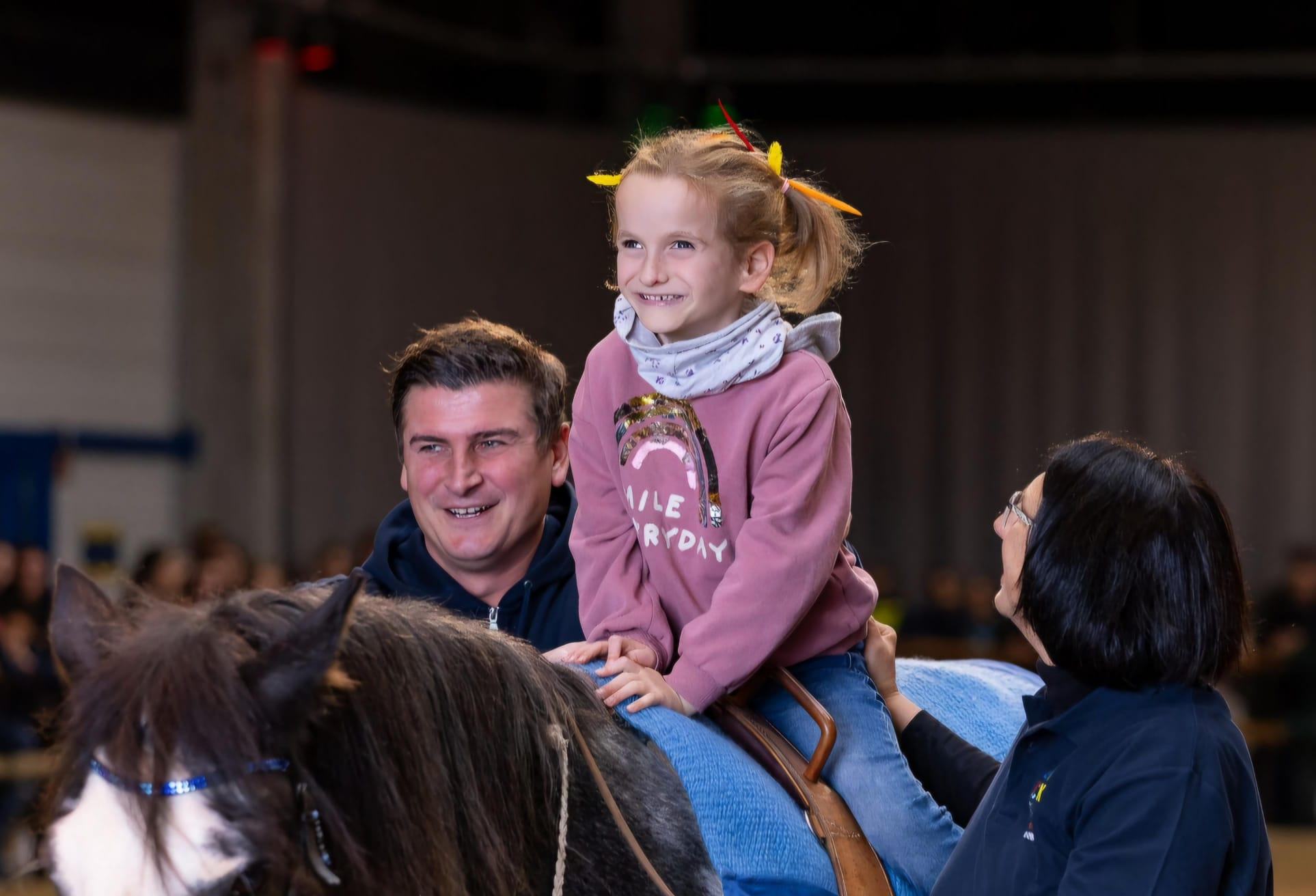
Report about our daughter Luisa (7 years old)
At 32, I became pregnant for the second time, and the first hurdles began with the nuchal translucency scan. At this appointment the doctor noticed hydrops, so I was referred to the prenatal clinic. There, about 14 days later, there was no longer any sign of hydrops. An amniocentesis showed no genetic abnormalities. The suspicion of fifth disease was ruled out several times.
Overall, the pregnancy did not go ideally: a single umbilical artery was found, and the heartbeat and blood flow were too fast – which meant weekly examinations and constant fear until the birth.
Labour was induced on the due date (normal birth), and after three days we were discharged from hospital with an “everything's fine”. Despite the history, there were no special examinations or conversations. We went home full of gratitude and happiness.
But fate had other plans: about three months later, after numerous mother-child-pass check-ups with various doctors, the suspicion grew that Luisa had too many “little problem areas”. Only a gastrointestinal specialist referred us to a senior neurologist. There, at about six months, extensive examinations were carried out: an MRI showed atrophy of the corpus callosum, enlargement of the inner and outer CSF spaces and damage to the optic nerve. Divergent strabismus, sluggish bowels, a severe global developmental disorder (cognitive and motor) and muscular hypotonia were also found. Later, a flat head, foot malpositions, atopic eczema, beginning scoliosis, hip joint malpositions and numerous urinary tract infections were added.
A metabolic disorder was suspected and genetic testing was initiated.
Two years (!) later, everything had a name: Snijders Blok type syndrome → Intellectual Developmental Disorder; X-linked, syndromic, Snijders Blok Type, MRXSSB, gene: DDX3X, de novo.
Luisa is currently the only person in Austria with this syndrome. Worldwide there are only about 50 known cases – mostly girls.
Luisa cannot speak, only vocalise. Her movements are uncontrolled. Luisa cannot eat, wash, get dressed etc. on her own. Holding someone's hand she can walk upright (unsteadily), and she can crawl on her own. Cognitively, we do not know what she understands and what she does not.
She needs a carer around the clock.
Our everyday life is shaped by intensive therapies and rehab stays (together with a healthy sibling). On top of that, you are left completely alone with the bureaucracy. The sheer number of forms, assessments and incompetent opinions from outside is increasingly tiring and draining. Every authority first tries to turn everything down – if you stay persistent and keep informing yourself for years, you realise that many basic rights are being disregarded.
In summary: at first you don't know where to turn – and once you have managed that, you have to slip into the role of a supplicant and be grateful for things that should really be a matter of course, e.g. a place with suitable care for my child in an educational institution. Only then can we parents go back to work to finance the expensive rehab stays abroad, as these are simply not offered here.